📡 UHF Satcom Piracy
The United States military operates a worldwide UHF geostationary satellite communication network using the 243–270 MHz band for downlinks and 292–318 MHz for uplinks. These satellites act as simple bent-pipe repeaters, relaying FM voice communications between military ground stations, ships, aircraft, and other assets around the world.
Because these satellites function much like radio repeaters and historically lacked strict access control on the uplink, they have occasionally been misused by unauthorized users. For decades, radio monitoring hobbyists have reported hearing pirate activity on these channels, ranging from truck drivers and fishermen to illegal loggers and various other groups who discovered their radios could reach the satellites.
A Brief History of UHF Military Satcom
The modern UHF military satellite network traces its origins back to the late 1970s with the launch of the Fleet Satellite Communications System (FLTSATCOM). These satellites were designed primarily for the United States Navy to provide reliable global communications for ships operating far from shore.
FLTSATCOM satellites were placed in geostationary orbit and carried multiple UHF transponders that acted as simple repeaters. UHF frequencies were chosen because they propagate well through foliage and require only small antennas, making them ideal for mobile platforms such as ships, aircraft, and ground vehicles.
In the 1990s the system was expanded with the UHF Follow-On (UFO) satellite constellation, and later the newer MUOS system began replacing legacy services. However, several older analog transponders remain active, which is why these signals can still be received by hobbyists today.
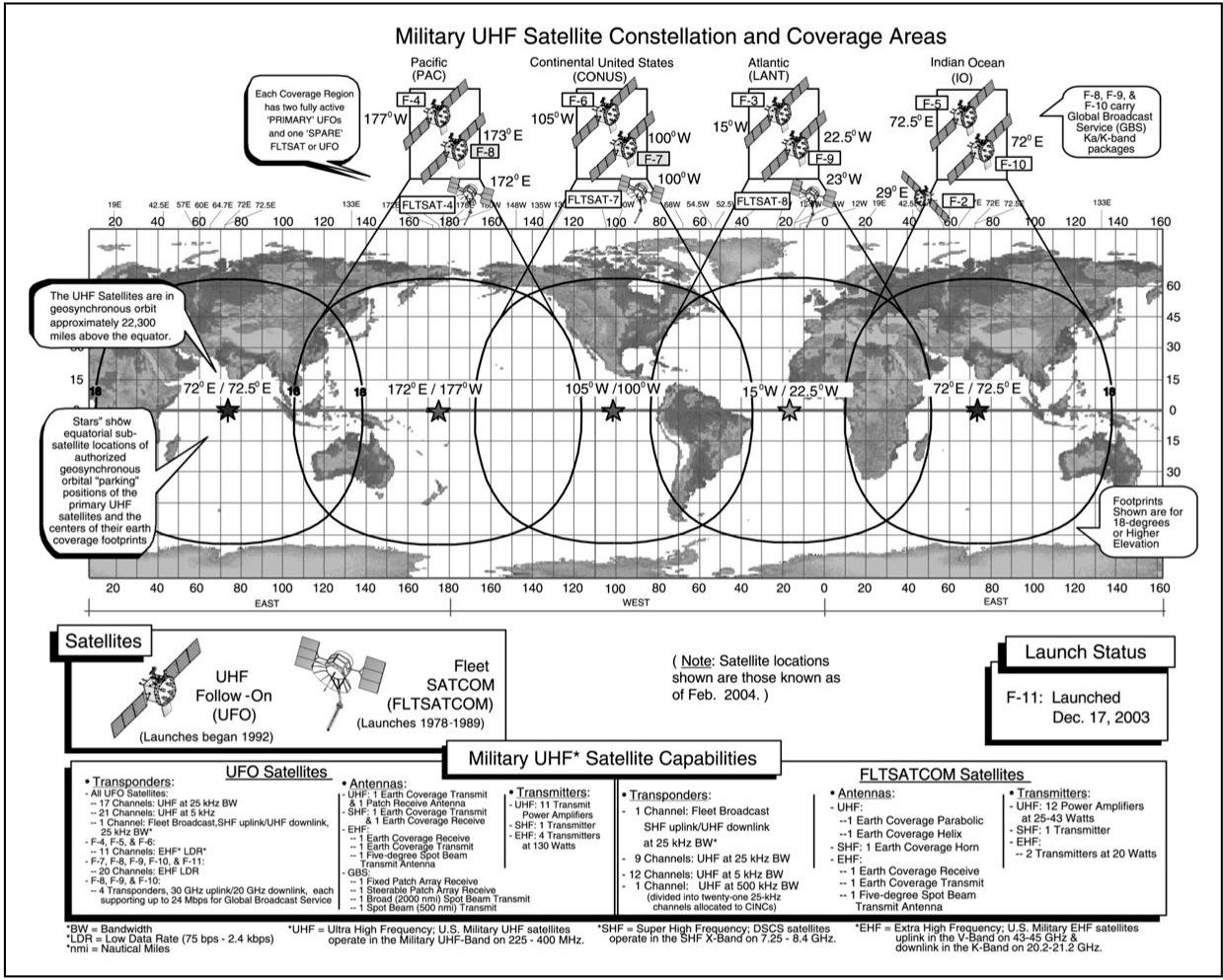
More technical information about the UHF military satellite constellation can be found here.
How I Discovered UHF Satcom Activity
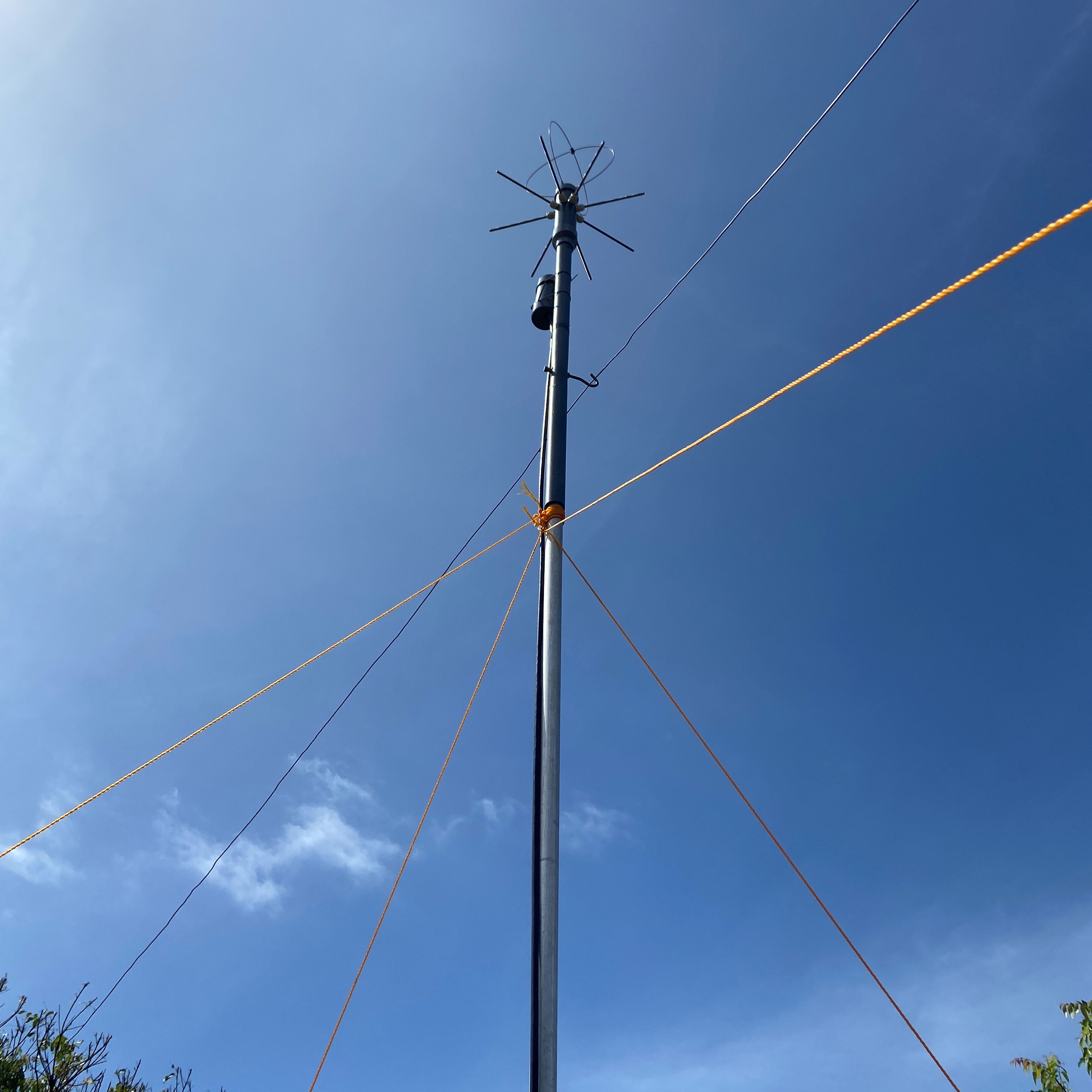
At the time I was experimenting with antenna designs for a small SatNOGS ground station I was planning to build. Since many satellite systems use circular polarization, I decided to experiment with building a simple UHF eggbeater antenna.
While testing the antenna with an RTL-SDR receiver, I started scanning the 243–270 MHz satellite downlink range and quickly discovered the very active 255.550 MHz channel, where pirate radio traffic could often be heard throughout the day.
Why an Eggbeater Antenna Works Well
Many satellite transmissions use circular polarization. The eggbeater antenna is well suited for this because it naturally produces circular polarization and has a wide radiation pattern pointed toward the sky.
This makes it ideal for satellite reception since it does not require precise pointing and can receive signals from a large portion of the sky.
UHF Satcom Frequency Database
Over time I compiled a list of commonly monitored UHF Satcom downlink frequencies shared within the radio monitoring community. The list was gathered from various online sources and monitoring groups, including UHF Satcom communities on Telegram.
Listen Online (WebSDR)
If you don't have the equipment to receive these satellites yourself, you can still listen using several public WebSDR receivers around the world.
Example Recording
A short recording of activity heard on the 255.550 MHz downlink
Disclaimer
Receiving satellite downlinks is legal in many countries. However, transmitting to these satellites without authorization is illegal and may interfere with legitimate communications. This post is intended for educational and hobbyist radio monitoring purposes only.