Decoding an Analog TV Broadcast Using SDR
Since I first started experimenting with Software Defined Radios (SDRs), I’ve managed to explore a surprisingly wide range of signals across the spectrum. Over time I experimented with many different types of transmissions, ranging from HF broadcasts all the way up to L-Band and C-Band satellite signals.
Most of my early experiments focused on HF and satellite bands. Unfortunately, anything above the broadcast FM band was often full of interference, mainly from strong local FM stations and other terrestrial transmitters. Because of that, I didn’t spend much time exploring the VHF and UHF spectrum for quite a while.
My HF Experiments
A few months later I built an End-Fed Half-Wave antenna covering the 80m–10m amateur bands, and it performed far better than I expected.
With it I was able to receive a wide variety of interesting signals including:
- Local fisherman chatter on 40m and 20m
- Daily ragchews from the local radio society on 40m
- CW weather stations from Japan on 60m
- Several DRM broadcasts, including some from as far away as Romania
After some time the lack of new activity on HF, and curiosity eventually pushed me to explore something new: the VHF and UHF bands.
Building a Wideband VHF/UHF Antenna
At the time I didn’t own a suitable antenna for these frequencies, so I decided to build one myself.
After researching several antenna designs, a friend suggested building a log-periodic antenna. This type of antenna is ideal for wideband reception and seemed perfect for experimenting across large portions of the spectrum.
Frequency Coverage: 100 MHz – 950 MHz
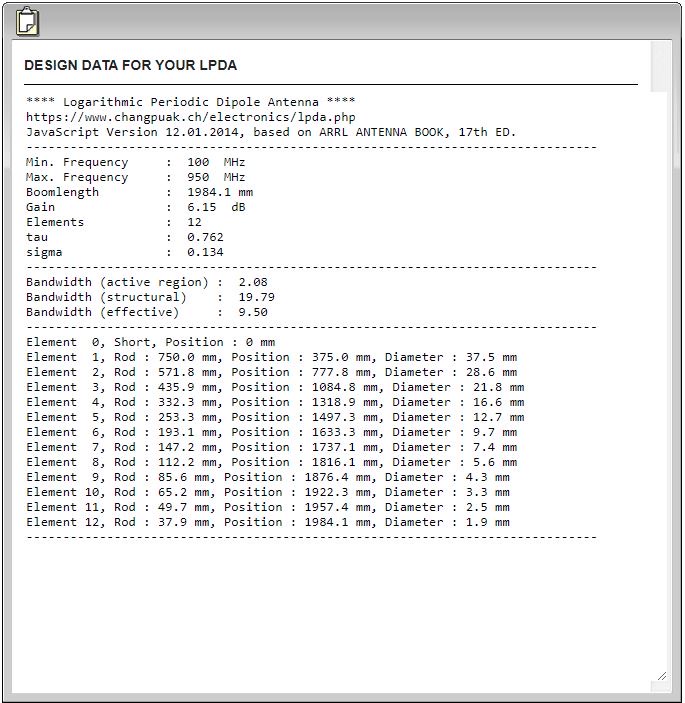
Construction Details
The antenna was built entirely from aluminum to keep it both lightweight and durable:
| Component | Material |
|---|---|
| Elements | 3/8 inch aluminum tubing |
| Booms | 1-inch aluminum box sections |
| Fasteners | Aluminum pop rivets |
The finished antenna was much sturdier than I originally expected. After completing the build, I mounted it horizontally on a pole about 30 feet above ground and connected it to my SDR setup.
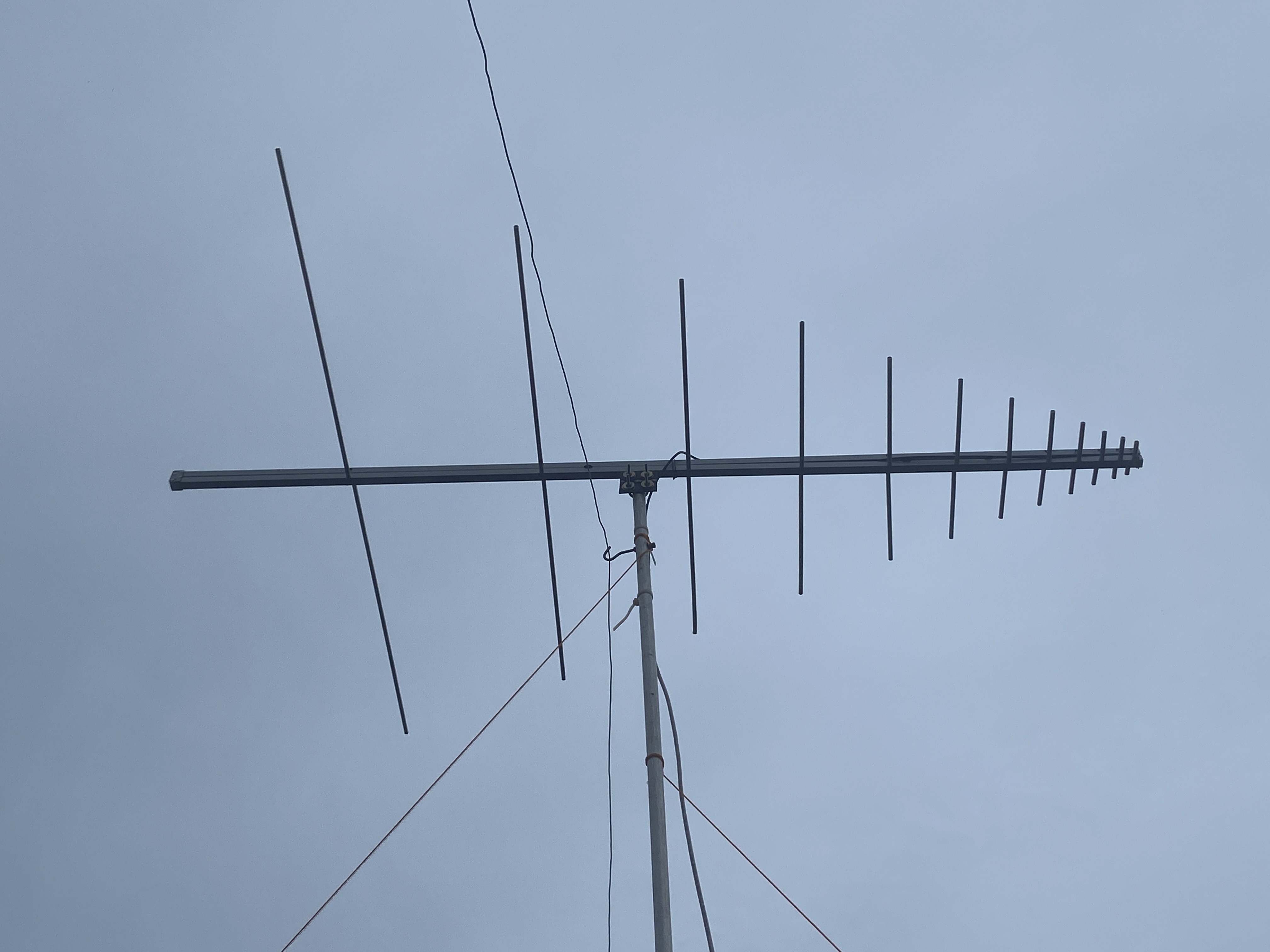
Discovering an Analog TV Signal
With the antenna installed, I started scanning through the spectrum to see what I could receive. While tuning through the band, I noticed a very wide signal that looked quite different from the others. At first I assumed it was some kind of interference or electrical noise.
To investigate further, I increased the bandwidth of my Airspy R2 to 10 Msps so I could see the entire signal clearly.
That’s when I realized what I was looking at: an analog TV broadcast.
Decoding the Signal
Fortunately, there is already a plugin available for decoding analog television called “PAL/SECAM/NTSC-TV”, which is included in the SDRSharp Community Build.
- Tune SDR to the video carrier
- Enable the TV option in the plugin
- Tune to the adjacent FM audio carrier
- Enjoy both picture and sound
Analog TV Signal Structure
Analog television signals have a very recognizable structure in the spectrum.
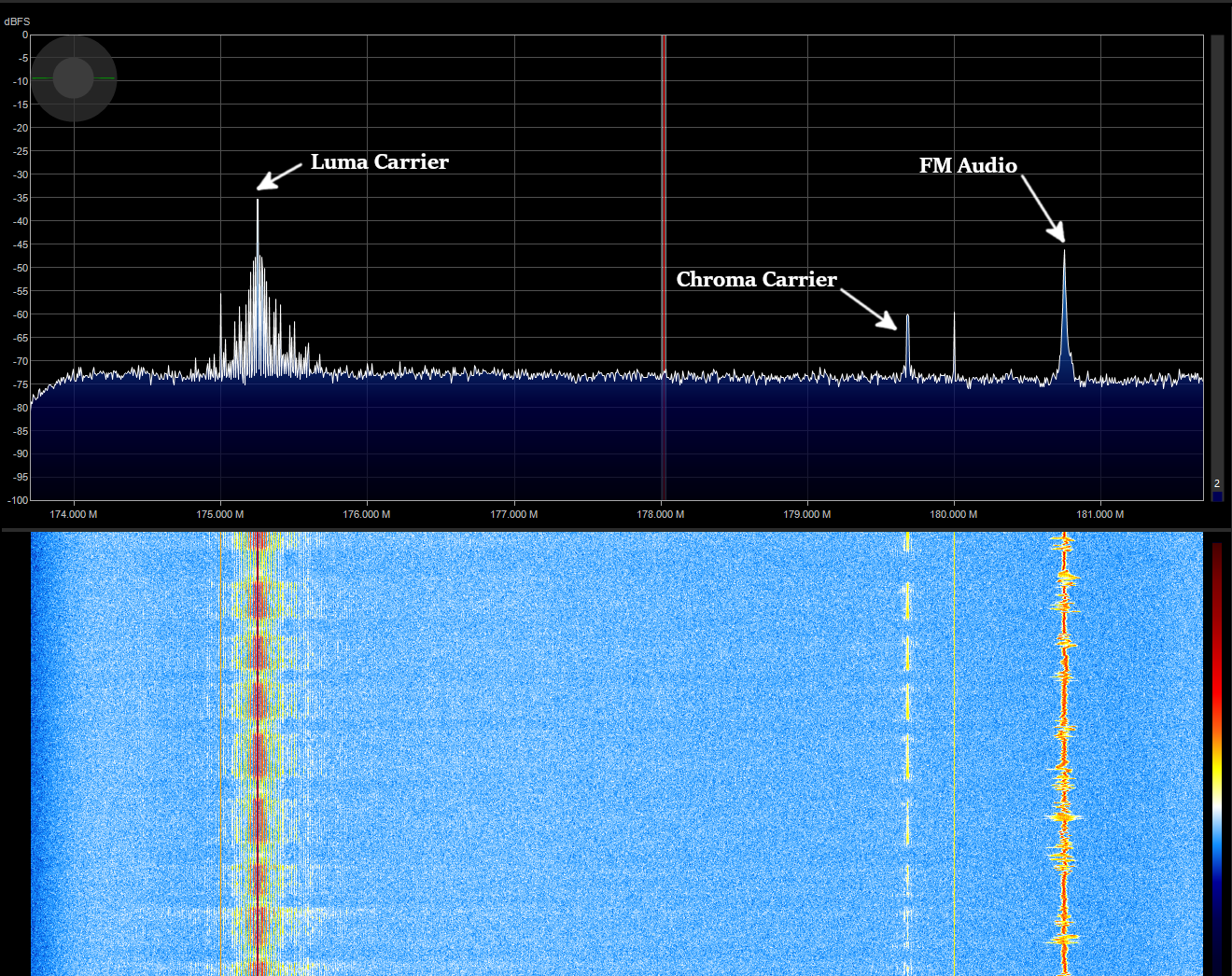
The video carrier contains the brightness information and synchronization signals, while the audio carrier is transmitted using FM and sits a few MHz away from the video signal.
Equipment Used
- Antenna mounted approximately 30 ft above ground
- Horizontal polarization
A Technology on the Verge of Disappearing
Although Sri Lanka has largely transitioned to satellite television, analog terrestrial TV transmissions are still used in some areas.
I’m really glad I had the opportunity to receive and decode one of these broadcasts myself before this technology eventually disappears for good.